Service to Sales Automation for Car Dealerships: How AI Turns Repair Orders Into Vehicle Sales and Used-Car Acquisitions
Your Service Drive May Be Your Most Overlooked Sales Opportunity
Every day, customers bring vehicles into your dealership for maintenance, repairs, and service. Your service department generates a steady flow of repair orders, customer information, and opportunities to build relationships.
But how many of those customers are also potential vehicle buyers?
Some may be driving vehicles with significant equity. Others may be approaching the point where replacing their current vehicle makes more financial sense than continuing to pay for repairs. Some may simply be ready for something newer but have not considered purchasing from your dealership.
The challenge is identifying those opportunities and engaging customers at the right time.
For many dealerships, the service drive and sales department operate as separate parts of the business. Service advisors focus on repairing vehicles, while sales teams concentrate on showroom traffic, internet leads, and traditional prospecting.
That separation can leave valuable opportunities undiscovered.
Service to sales automation for car dealerships changes that process.
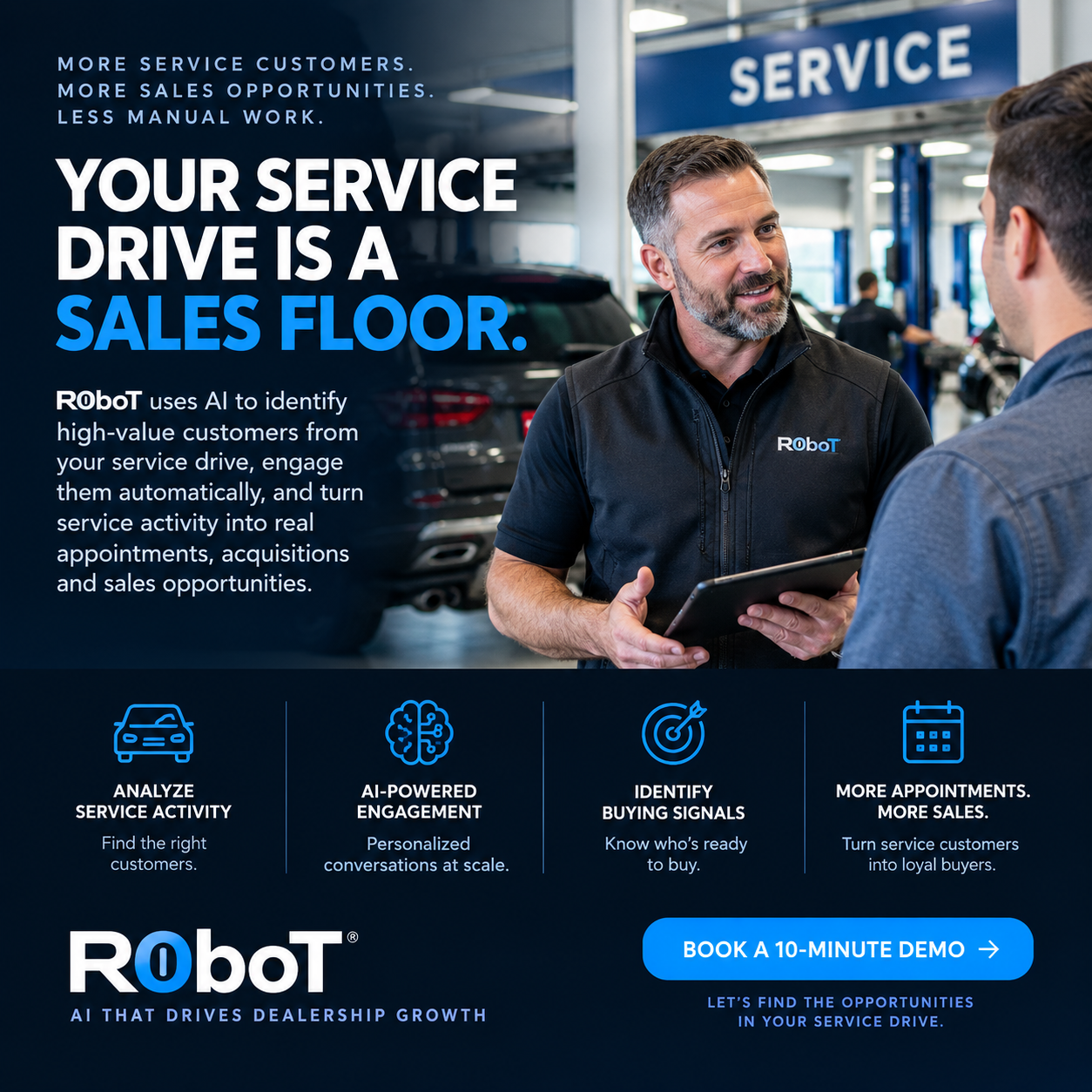
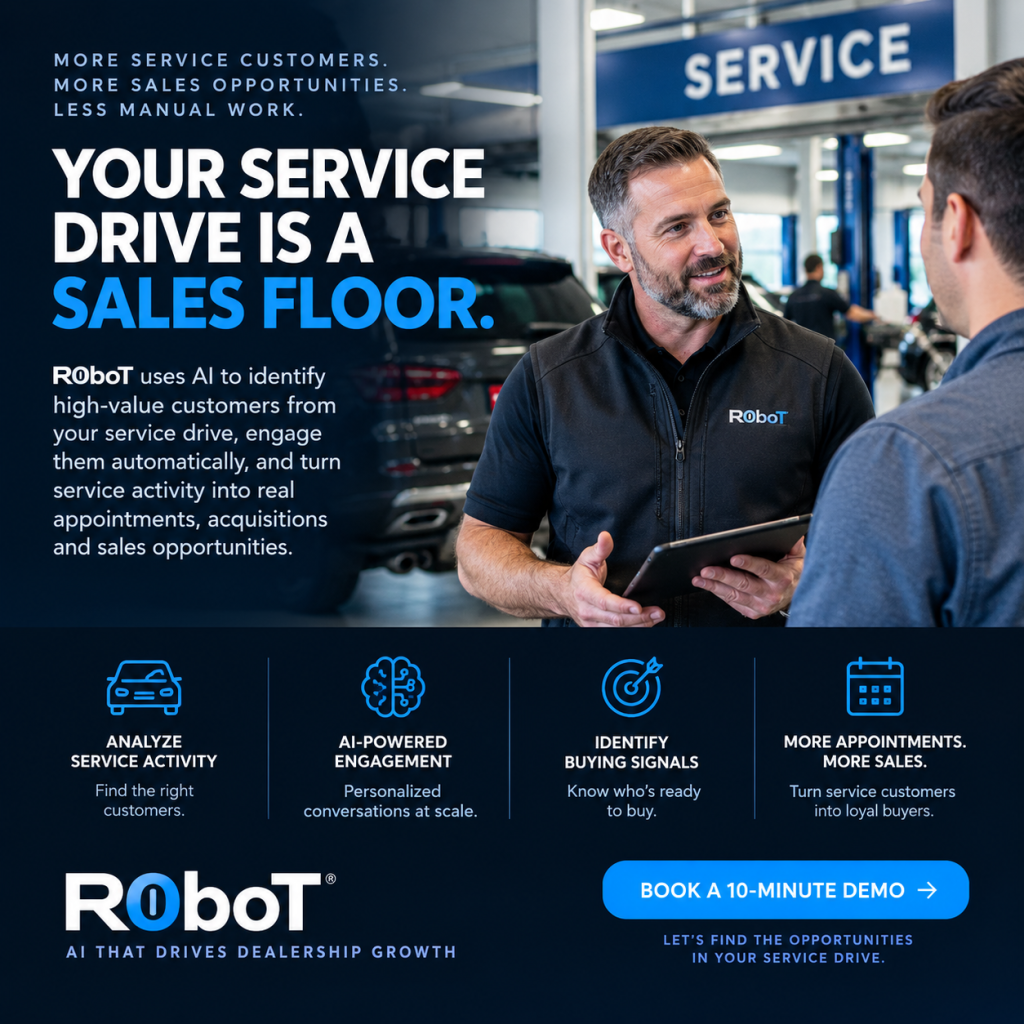
ROboT, which stands for Repair Order Bot, is designed to connect service activity with vehicle acquisition and sales opportunities. It uses repair-order information, vehicle-specific factory build sheets, appraisal tools, automated messaging, and human Business Development Center (BDC) follow-up to help dealerships turn service visits into meaningful customer conversations.
Rather than waiting for customers to walk into the showroom, dealerships can begin identifying opportunities while those customers are already on the property.
1. Why Dealerships Need a Better Service to Sales Strategy
The automotive retail environment has become increasingly competitive. Dealerships are constantly looking for ways to improve customer retention, acquire quality used inventory, and generate additional sales without relying entirely on expensive third-party leads.
Your existing customer database may already contain opportunities that are difficult to identify through traditional sales processes.
Consider a customer who brings in a three-year-old SUV for a major repair. The vehicle may have substantial equity, and the customer may be approaching a decision about whether to repair or replace it.
Without a proactive process, that customer may leave after the service appointment and eventually purchase a replacement vehicle from another dealership.
The dealership completed the repair but missed a potential sales and acquisition opportunity.
A more effective approach connects the repair order to the sales department.
When a repair order opens, ROboT can begin evaluating the vehicle, identifying its equipment, generating an appraisal through the dealership’s existing appraisal system, and initiating a relevant conversation with the customer.
This creates an opportunity to:
- Identify customers who may be ready to sell or trade their vehicles.
- Generate additional showroom appointments.
- Acquire used vehicles directly from existing customers.
- Improve customer retention.
- Create a more consistent connection between service and sales.
- Make better use of existing dealership traffic.
The objective is not to distract the service department from its primary responsibility. It is to help the dealership recognize additional opportunities within the customers it already serves.
2. How ROboT Turns Repair Orders Into Sales Opportunities
A successful service to sales strategy requires more than sending a generic text message to everyone who visits the service department.
Customers need a reason to engage. The dealership needs accurate vehicle information. And when a customer expresses interest, someone needs to follow up and move the conversation toward an appointment.
ROboT is designed around a six-step process.
Step 1: A Repair Order Opens
The process begins when a customer checks in for service and a repair order is created.
ROboT reads the repair-order information in real time, creating an opportunity to evaluate the customer’s vehicle while it is already at the dealership.
This timing matters. The customer is physically present, the dealership has an existing relationship, and the vehicle is available for a potential inspection.
Step 2: Retrieve the Actual Factory Build Sheet
Vehicle values can vary significantly depending on factory-installed options, packages, and equipment.
A basic VIN decode may identify the vehicle’s year, make, model, and trim, but it may not provide the complete equipment information needed for a more accurate appraisal.
ROboT retrieves the actual factory build sheet associated with the specific VIN.
This allows the appraisal process to account for installed options and packages rather than relying exclusively on generic vehicle information.
For example, two vehicles with the same model and trim may have different equipment packages that influence their market value.
More accurate vehicle information helps create a stronger starting point for the appraisal and customer conversation.
Step 3: Generate an Appraisal Using Your Existing Tools
After retrieving the build sheet, ROboT books the vehicle into the dealership’s existing appraisal tool, such as vAuto or another supported platform.
The process follows the dealership’s own pricing philosophy and appraisal strategy.
Vehicle history information from Carfax or AutoCheck can also be considered, including prior accidents, rental history, and title issues.
This is important because a vehicle’s value should reflect more than its basic specifications.
The result is an informed opening appraisal based on the vehicle’s actual equipment and available history.
A physical inspection is still necessary before a final purchase decision.
Step 4: Start a Customer Conversation Through Text
Instead of immediately sending an unsolicited appraisal number, ROboT can ask the customer whether they would like to know what their vehicle is worth.
That small difference changes the interaction.
The customer is given an opportunity to express interest rather than being treated like another name on a marketing list.
When a customer responds positively, the dealership has a hand-raiser: someone who has indicated interest in learning more about their vehicle’s value.
This creates a more relevant starting point for the next step.
Step 5: A Human BDC Representative Follows Up
Automation can help identify opportunities and initiate conversations, but customers still value personal communication.
When a customer expresses interest, an in-house human BDC representative follows up by phone.
This is an important distinction. The customer is not being handed off to a voice bot pretending to be a person.
A real representative can answer questions, understand the customer’s situation, explain the appraisal process, and work toward scheduling an appointment.
The combination of automation and human follow-up helps dealerships manage opportunities without requiring sales staff to manually work every repair order.
Step 6: Schedule an Appointment and Complete the Handoff
The goal is to move the customer from initial interest to an in-person vehicle inspection.
Once an appointment is scheduled, the dealership receives the relevant conversation context so its team can prepare.
The appraisal, customer interest, and follow-up history help create a more informed interaction when the customer arrives.
Instead of starting from scratch, the sales or acquisition team can continue a conversation that has already begun.
3. Why Accurate Vehicle Appraisals Matter
One of the biggest challenges in vehicle acquisition is establishing credibility with the customer.
If a dealership sends an appraisal that does not accurately reflect the vehicle’s equipment, the customer may question the offer before the conversation even begins.
A generic VIN decode can miss factory-installed packages or upgrades. That can lead to an appraisal that does not fully reflect the vehicle.
ROboT addresses this by using the actual factory build sheet for the specific VIN.
The appraisal process can then incorporate:
- Factory-installed options.
- Vehicle trim and equipment packages.
- Available vehicle history.
- Prior accidents.
- Rental history.
- Title-related information.
- The dealership’s existing appraisal strategy.
For example, a vehicle with premium packages and additional factory equipment may have a different value than another vehicle with the same model and trim.
Accurate information gives the dealership a better foundation for its offer and helps the customer understand that the appraisal is based on their actual vehicle.
The objective is to create a credible starting point for a real appraisal conversation, not to replace the dealership’s physical inspection.
4. Turn Service Traffic Into a Source of Used Vehicle Inventory
Used vehicle acquisition remains a major priority for dealerships.
Auction purchases, trade-ins, and traditional acquisition channels all have a role in inventory strategy. However, dealerships may overlook vehicles already coming through their own service lanes.
These customers have an existing relationship with the store. Their vehicles are already on the property, and the dealership has an opportunity to start a conversation about purchasing them.
ROboT helps identify vehicles that may represent acquisition opportunities based on available repair-order, vehicle, and appraisal information.
This can help dealerships:
- Identify potential purchases before customers begin shopping elsewhere.
- Find vehicles that fit their inventory needs.
- Create additional acquisition appointments.
- Reduce dependence on a single inventory sourcing channel.
- Build relationships with customers who may be considering a replacement vehicle.
The opportunity becomes especially interesting when the process operates consistently across the dealership’s service volume.
According to September 2026 aggregate reporting across participating dealerships, matched to DMS records, the reported results were 13 vehicles acquired and 18 vehicles sold per 1,000 repair orders.
These figures are aggregate results, not a guarantee of performance for an individual dealership. Actual results will depend on service volume, customer mix, market conditions, inventory strategy, and execution.
Still, they illustrate why service-drive vehicle acquisition deserves attention as part of a dealership’s broader inventory strategy.
5. Why Human BDC Follow-Up Still Matters
Technology can identify opportunities, but it does not eliminate the importance of customer relationships.
A customer may respond to an initial text but not be ready to visit the dealership immediately. Another may have questions about their appraisal or want to discuss replacement options with a family member.
Without consistent follow-up, these opportunities can disappear.
ROboT combines automated outreach with human BDC engagement to help keep conversations moving.
The human BDC team can:
- Follow up with customers who express interest.
- Make outbound calls and send additional messages.
- Answer questions about the appraisal process.
- Work toward setting appointments.
- Maintain communication with customers over time.
- Pass relevant customer information to the dealership.
The system is designed to work opportunities for up to 90 days rather than abandoning them after a few unsuccessful contact attempts.
That longer follow-up period matters because vehicle purchases do not always happen immediately. Customers may need time to evaluate their options, review finances, or wait for the right opportunity.
Consistent engagement gives the dealership another chance to be part of the conversation when the customer is ready.
6. Integrate With Your Existing Dealership Technology
Dealership teams already manage multiple systems throughout the day. Adding another dashboard or requiring employees to learn an entirely new platform can create unnecessary friction.
ROboT is designed to work with the dealership’s existing technology environment.
Its integrations include dealership management systems such as:
- CDK
- Reynolds & Reynolds
- Dealertrack
It can also work with appraisal platforms such as vAuto, vehicle history resources such as Carfax and AutoCheck, and the dealership’s existing CRM.
Qualified leads are pushed into the CRM the dealership already uses, helping the sales team continue working within familiar processes.
This approach is important because the goal is to improve dealership operations, not create another disconnected system.
The dealership can also review call recordings, transcripts, and AI-assisted call analysis to better understand customer conversations and BDC performance.
7. Measure Results Based on Acquisitions and Sales, Not Just Leads
Many automotive marketing programs emphasize the number of leads generated.
But lead volume alone does not tell a General Manager whether a program is producing profitable business.
A dealership can receive hundreds of leads and still struggle to turn those opportunities into appointments, acquisitions, and completed sales.
A stronger measurement strategy looks at the entire process:
- Repair orders evaluated.
- Customers contacted.
- Customer responses and hand-raisers.
- BDC calls and follow-up activity.
- Appointments scheduled.
- Appointments completed.
- Vehicles acquired.
- Vehicles sold.
- Cost per acquisition and cost per completed deal.
ROboT is designed to provide visibility into the activity behind the results, including customer engagement, calls, texts, appointments, and matched dealership transactions.
This gives dealership leadership a more meaningful way to evaluate performance.
Instead of asking only how many leads were generated, ask:
How many vehicles did the program help us acquire, how many sales did it influence, and what did each completed opportunity cost?
That is the kind of information a dealership can use to make better operational and financial decisions.
8. Why Service-to-Sales Automation Is Worth a Closer Look
The service department already brings customers and vehicles onto dealership property every day.
The opportunity is to make better use of those interactions.
A customer who arrives for an oil change may have no intention of purchasing a vehicle that day. But that does not mean they would not consider an appraisal, a trade-in, or a different vehicle if the opportunity were presented appropriately.
The key is having a process that identifies the opportunity, provides relevant information, and follows through with the customer.
ROboT brings together repair-order intelligence, vehicle-specific appraisal information, customer messaging, and human BDC follow-up in one service-to-sales operation.
For dealership leadership, this creates an opportunity to connect two important areas of the business: service retention and vehicle sales.
It also provides another potential source of used inventory from customers the dealership already knows.
Frequently Asked Questions About Service-to-Sales Automation
What is service to sales automation for car dealerships?
Service to sales automation is a process that helps dealerships identify potential vehicle sales and acquisition opportunities from customers visiting the service department. It can use repair-order data, vehicle appraisals, customer messaging, and BDC follow-up to create appointments and sales conversations.
How does ROboT identify potential vehicle buyers?
ROboT begins when a repair order opens. It evaluates vehicle information, retrieves the actual factory build sheet for the VIN, generates an appraisal through the dealership’s existing appraisal tool, and can initiate a text conversation asking whether the customer wants to know what their vehicle is worth.
Does ROboT use AI to make phone calls?
The process combines automation and human communication. When a customer expresses interest, an in-house human BDC representative follows up by phone. The approach is designed to create genuine customer conversations rather than relying on a voice bot pretending to be a person.
Does a dealership need to replace its CRM or DMS?
No. ROboT is designed to integrate with existing dealership systems, including supported DMS platforms, appraisal tools, and CRMs. Qualified leads can be delivered into the CRM the dealership already uses.
How does ROboT help dealerships acquire used vehicles?
It identifies potential acquisition opportunities among customers already visiting the service department. By generating vehicle appraisals and engaging customers, the dealership has an opportunity to purchase vehicles directly from existing customers.
How long does customer follow-up continue?
The program is designed to support customer engagement for up to 90 days. This allows the BDC team to continue conversations with customers who may not be ready to make a decision during their initial service visit.
Can service-to-sales automation help increase dealership sales?
It can create additional sales opportunities by identifying customers who may be considering a vehicle change and connecting them with the dealership’s sales team. Results depend on customer engagement, appointment activity, dealership execution, and market conditions.
How should a dealership measure the success of a service to sales program?
Dealerships should look beyond lead volume. Important measurements include appointments set and completed, vehicles acquired, sales influenced or completed, customer engagement, and the cost per acquisition or completed deal.
Conclusion: Your Next Vehicle Sale May Already Be in Your Service Drive
Dealerships invest significant resources in bringing customers onto their property. Every repair order represents an existing customer relationship and a potential opportunity to create additional value.
The question is whether your dealership has a consistent process for recognizing those opportunities.
With ROboT, repair-order activity can become the starting point for vehicle-specific appraisals, customer conversations, BDC appointments, and potential vehicle acquisitions.
Instead of treating service and sales as separate departments, dealerships can create a more connected process that helps retain customers, source used inventory, and uncover additional revenue opportunities.
Your service drive is already generating customer traffic. The next step is making sure your dealership is maximizing the opportunities within it.
See What Your Service Drive Could Be Producing
If you are a General Manager, Dealer Principal, or dealership leader looking for additional ways to generate vehicle acquisitions and sales opportunities, take a closer look at how ROboT works.
Request a demonstration and see how repair orders can become a consistent source of customer engagement, appointments, and potential vehicle transactions.
ROboT — Turning Repair Orders Into Sales Opportunities.